

CBSE Class 10 Board Exam Preparation: Study Plan, Timetable & Tips
Class 10 boards in CBSE are among the most tense moments for students academically. And with the new update about the board exam pattern from CBSE has fueled preparation anxiety even more. However, Class 10 board exam preparation doesn’t mean children prepare from morning through night, or even skip weekends for studying. The strongest approach is to prepare a consistent study routine throughout the year. What does that look like? Let us break it down.
When Should Preparation Begin?
The answer is not to plan it to start around the final few months. Board preparation can start as soon as Class 9 (which would equate to entering high school in Bangalore and continue sectionally.
| In Class 9 | At the beginning of Class 10 | During the middle of Class 10 | Before the Board Exams |
| Building strong concepts | Map the complete syllabus | Completing the syllabus | Full syllabus revision |
| Developing regular study habits | Identify difficult chapters | Revising completed chapters | Timed sample papers |
| Learning how to revise | Set weekly study goals | Practising application-based questions | Previous question papers |
| Clearing doubts instead of carrying them forward | Revise lessons regularly | Taking chapter and subject tests | Answer-writing practice |
| Becoming comfortable with different question types | Start practising questions alongside classroom learning | Maintaining an error notebook | Targeted revision of weak areas |
| Improving speed and accuracy | |||
What Is the Best Study Plan for Class 10?
Instead of planning it all together, you can divide it into four phases.
Phase 1: Understand & Build
After you have had your first reading, you need to categorize subjects as:
- Strong: I can solve questions independently.
- Needs revision: I understand the chapter but forget details.
- Needs attention: I struggle to understand or apply the concepts.
This simple exercise gives you a standing across subjects.
Phase 2: Learn & Practice
Revision is very important. Once you complete a chapter in school, you should revise it a few days later.
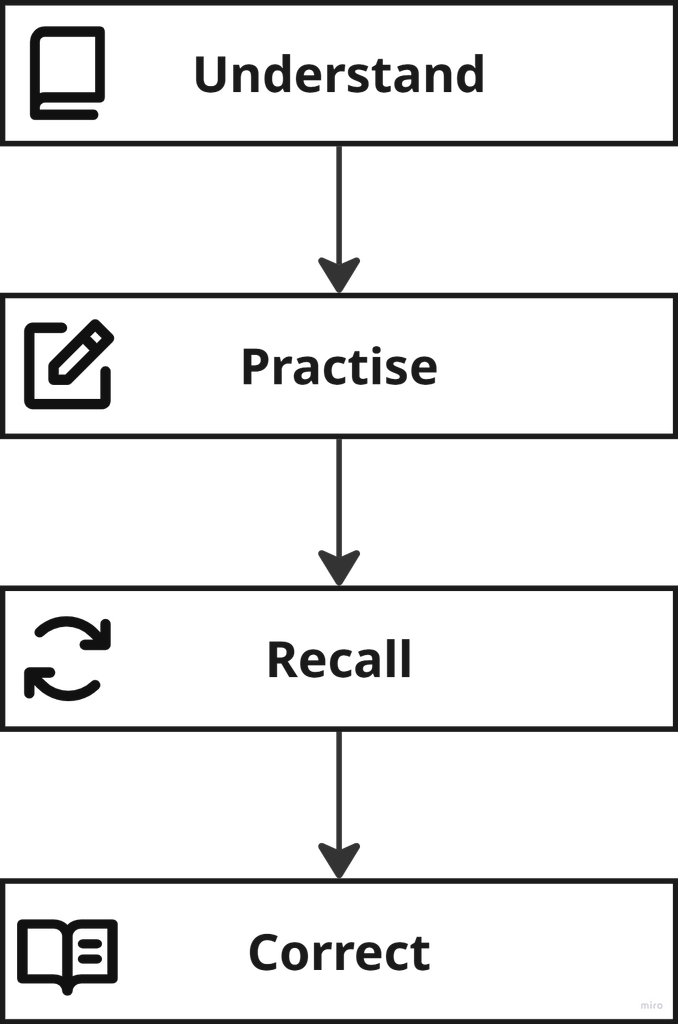
Don’t fall into the trap of just opening the book repeatedly and thinking it will help your learning. Recall important concepts and answer without reference.
Phase 3: Revise and Test
Post-revision, you should schedule periodic tests such as:
- Monday-Friday: learning and daily revision
- Saturday: weekly revision and chapter test
- Sunday: longer revision or sample-paper practice
After every test, analyze. That is the most important step for improvement.
Phase 4: Simulate the Examination
CBSE has published official Class X Sample Question Papers and Marking Schemes for the 2026-27 examination cycle, covering all subjects. Students should take these timed mocks to prepare for the real examination conditions.
CBSE Class 10 Study Timetable for a School Day
| Time | Activity |
| 6:00-6:30 AM | Wake up and morning routine |
| 6:30-7:00 AM | Quick revision or recall |
| School hours | Classes and active participation |
| 4:00-5:00 PM | Lunch, rest and recreation |
| 5:00-6:15 PM | Difficult subject/concept study |
| 6:15-6:45 PM | Break or physical activity |
| 6:45-7:45 PM | Second subject and question practice |
| 7:45-8:30 PM | Dinner and family time |
| 8:30-9:15 PM | Homework/revision |
| 9:15-9:30 PM | Plan the next day |
| Around 10:00 PM | Sleep |
Note: This varies by school. For example, if you are studying in the CBSE grades 9 & 10 school in Varthur, you should look at your specific timetable.
A Simple Weekly Study Plan
| Monday to Friday | Saturday | Sunday |
| Revise what was taught in school | Revise the week’s lessons | Revise older chapters |
| Complete homework | Take a short test | Practise a longer paper when appropriate |
| Practise at least one difficult subject | Review mistakes | Organise notes |
| Spend some time recalling older topics | Clear pending doubts | Plan the coming week |
| Make time for recreation | ||
Subject-Wise CBSE Class 10 Preparation Tips
Mathematics
Use this sequence to study the subject:
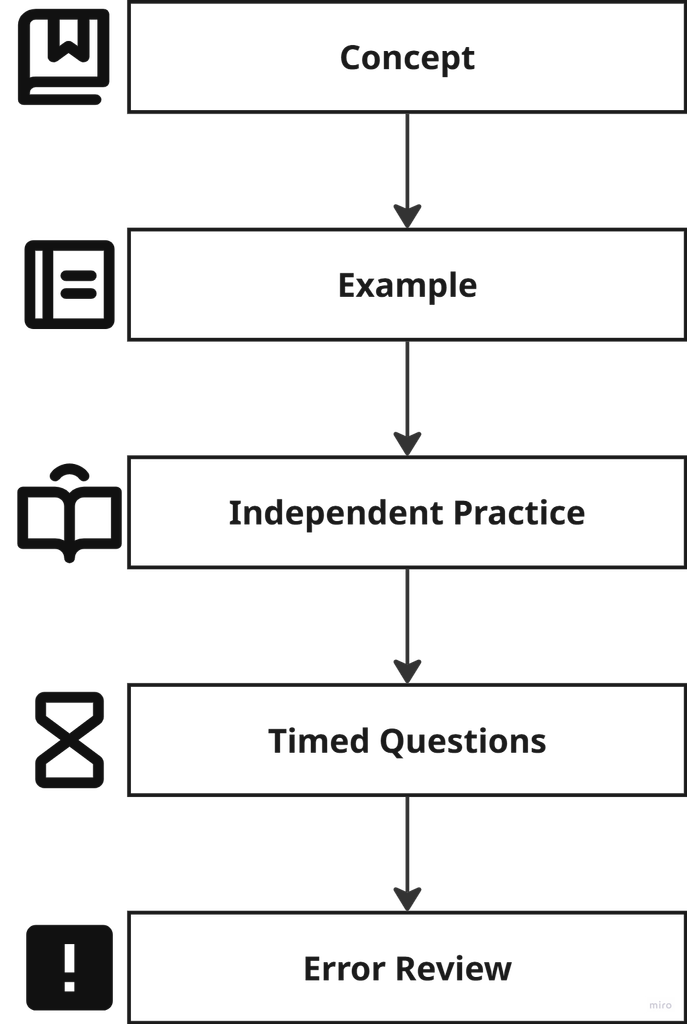
This creates an effective loop where students recognize repeated errors.
Science
- Understand concepts in simple language
- Practice diagrams wherever required
- Revise definitions and key terms
- Solve numericals and application-based questions
- Connect concepts with examples
- Write answers without memorization
Social Science
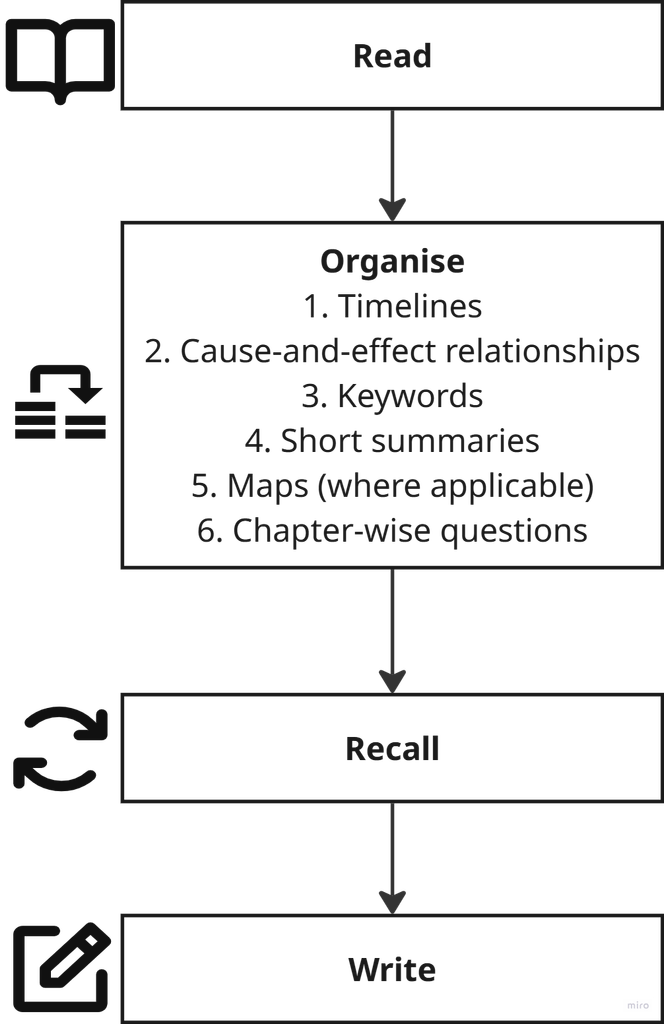
The ability to reproduce an answer in your own words is more useful than recognising it when you see it in the textbook.
English & Other Languages
Students can work on:
- Reading comprehension
- Grammar
- Writing formats
- Literature themes
- Character or idea-based questions
- Vocabulary
- Answer structure
Use Sample Papers as a Learning Tool, Not Just a Test
- Understand the Paper
Before you start solving, understand how the question paper is structured and the effective answer format. - Practise
Solve individual questions or sections while studying relevant chapters. - Simulate
Create exam-like conditions to gauge your readiness under time and other constraints.
Maintain Three Simple Study Records
- Revision Notebook
This notebook is your easy & quick access to:
- Formulas
- Definitions
- Important concepts
- Dates
- Keywords
- Diagrams
- Difficult points
- Mistake Notebook
You should note every mistake in this format:
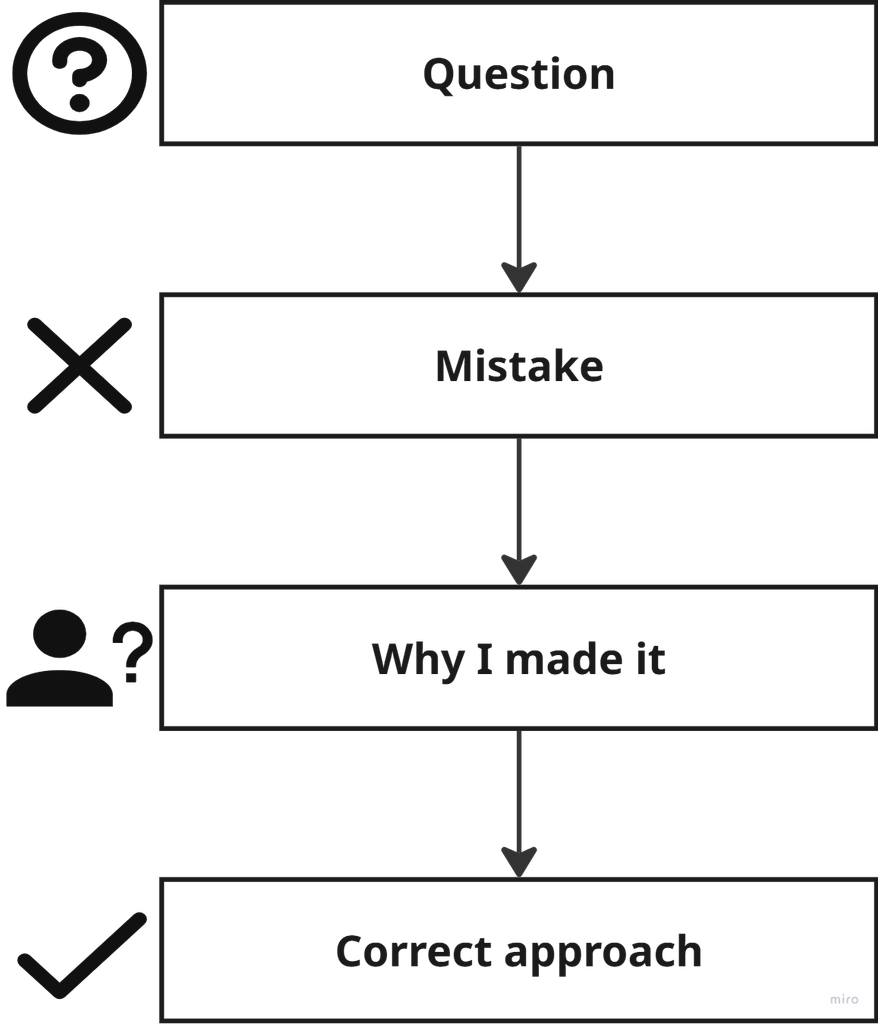
Learning from mistakes you’ve already made is a better approach than anything else.
- Doubt Notebook
You should note every question you struggle with. Take these to the respective teachers afterwards. This can be particularly helpful in the best secondary school in Varthur, where dedicated doubt sessions are conducted.
10 Class 10 Board Preparation Mistakes to Avoid
- Starting only when the exams are near
- Studying only favourite subjects
- Reading without testing yourself
- Making complicated timetables
- Solving papers without analysing mistakes
- Ignoring doubts
- Memorising everything word-for-word
- Studying continuously without breaks
- Sacrificing sleep
- Treating the second Board Exam as a safety net
Important note: CBSE has introduced a second board exam for students to improve their marks in up to three subjects. However, students should not use this as a safety net. They should put their 100% into the first exam, and only consider minor improvements for the second exam.
Final Thoughts
Preparation for the Class 10 CBSE examination doesn’t have to be hasty. Students can start pretty early. This provides them with a considerable amount of time for revision and practice, which are the two crucial elements of succeeding in the exam. The goal is not to make Class 10 students study every waking hour. The goal is to help them make their study hours count.
Frequently Asked Questions (FAQs)
How much time to study for Class 10?
If you are in the initial period of Class 10, you should put in at least 2-3 hours of study time for success in board exams.
How to score 95 %+ in Class 10?
To score 95% or above in Class 10 board exams, treat your NCERT Textbooks as your primary resource, combine it with daily study consistency of 2 to 4 hours, and practice previous year question papers (PYQs) systematically.
Can I score 95% in 7 days?
If you are starting from scratch, no. You should focus on preparing from earlier times, and treat the last 7 days as a revision & testing period.